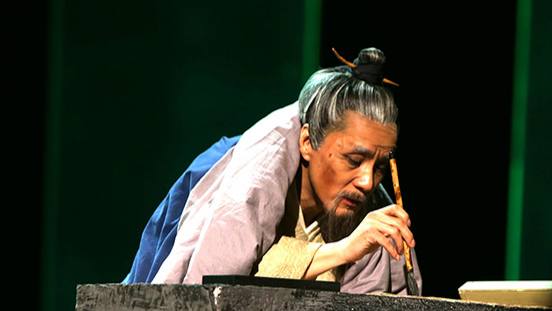
Sima Qian
Introduction
Sima Qian, one of China's most prominent historians, is celebrated for his monumental work, the Records of the Grand Historian (Shiji). Born around 145 BC during the Han Dynasty (though some scholars debate the exact year), Sima Qian's legacy as a pioneering historian remains influential in Chinese historiography. His writings set a foundation for historical recording, combining narrative artistry with a meticulous approach to historical facts. Sima Qian's contributions not only chronicled the history of China up to his time but also established new methodologies for historical documentation. His works have been an invaluable resource for understanding China's past and have inspired generations of historians and scholars. His career, philosophical views, and personal experiences, particularly his suffering and resilience following imprisonment and castration, have made his life a subject of extensive study and admiration.
Early Life
Sima Qian was born in Longmen, near modern-day Hancheng in Shaanxi province, into a family with a rich tradition in historiography. His father, Sima Tan, served as the Grand Historian (Taishi) during the Han Dynasty, a position that involved the documentation of the court's activities and events. It was under his father's tutelage that Sima Qian received his early education, instilling in him a profound understanding of history, literature, and traditional Chinese culture. The family's dedication to chronicling historical events greatly influenced Sima Qian's future endeavors. As a young man, Sima Qian traveled extensively throughout China, visiting ancient sites and learning about various local traditions and histories. These experiences broadened his perspective and deepened his understanding of China's vast history and culture, laying the groundwork for his future work as a historian.
Career
Sima Qian's career was marked by both significant achievements and personal tribulations. He initially served as a court gentleman (lang), which provided him with insights into court life and politics. His early duties included traveling as an envoy to perform sacrifices at sacred sites and documenting these journeys, which further enriched his historical knowledge.
Appointment as Grand Historian
Upon the death of his father, Sima Tan, Sima Qian inherited the position of Grand Historian at the Han court. This role was not merely an administrative position but carried the weighty responsibility of documenting the history of the empire. As Grand Historian, Sima Qian began the monumental task of compiling the Records of the Grand Historian (Shiji), a comprehensive history of China from its mythical origins to his contemporary Han Dynasty. This work required a meticulous examination of existing documents, oral histories, and a critical assessment of sources to ensure accuracy and coherence.
Contributions to Historiography
Sima Qian's Records of the Grand Historian is considered a pioneering work in Chinese historiography. It was the first general history of China, providing a chronological account and comprehensive biographies of significant figures, making history accessible and engaging. His innovative approach included the use of biographies, chronological tables, and treatises on various subjects such as music, economics, and law, which offered a multidimensional view of history. Sima Qian's work was characterized by his objective analysis and his willingness to critique the actions of emperors and officials, showcasing his commitment to historical truth over political expediency.
Works
Sima Qian's literary output primarily centers around his magnum opus, the Records of the Grand Historian (Shiji), which remains a cornerstone of Chinese historical literature.
Records of the Grand Historian (Shiji)
The Records of the Grand Historian consists of 130 chapters, encompassing a wide array of historical records, including annals of emperors, chronological tables, treatises on various topics, and detailed biographies. This structure allowed Sima Qian to present a holistic view of Chinese history, integrating political, social, and cultural dimensions. His narratives were not only informative but also engaging, providing insights into the personalities and events that shaped China's history. The Shiji's comprehensive scope and depth have made it an invaluable resource for historians and scholars, offering a template for subsequent historical writings.
Influence and Legacy
Sima Qian's influence extends beyond his historical documentation. His emphasis on thorough research, narrative clarity, and moral integrity set standards for historical writing in China. The Shiji's impact is evident in its adoption by later historians, such as Ban Gu and Sima Guang, who followed Sima Qian's methodologies in their own works. Furthermore, Sima Qian's legacy transcends historical writing, as his personal story of resilience and dedication has inspired countless individuals. Despite enduring great personal suffering, his commitment to completing the Shiji demonstrated an unwavering dedication to truth and scholarship.
Philosophical Views
Sima Qian's philosophical views were shaped by his Confucian upbringing and his exposure to diverse ideas during his travels. His writings reflect a deep understanding of human nature, morality, and governance. Sima Qian emphasized the importance of historical truth and moral integrity, often critiquing the actions of rulers and advocating for benevolent governance. His philosophical insights are woven throughout his historical narratives, offering reflections on the ethical dimensions of leadership and the consequences of moral failings. This philosophical depth, combined with his narrative skills, has contributed to the enduring appeal and relevance of his work.








